
Custom LED Neon Sign: Gaming & Anime Wall Decor
How to choose your custom neon sign based on the room and use
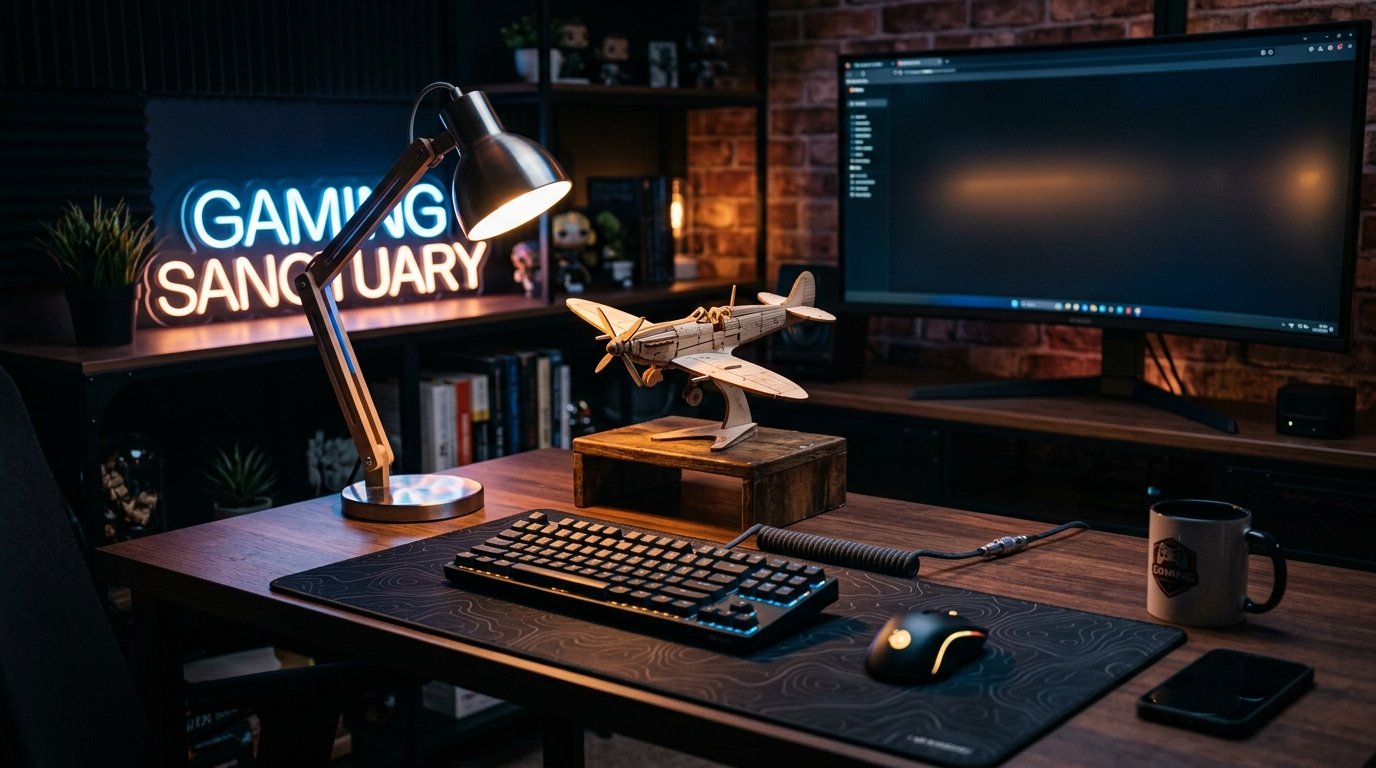
An LED neon sign for a bedroom doesn't face the same constraints as one placed behind a gaming setup. In a bedroom, some users leave the light on all night or use it as a nightlight: a 30 to 40 cm size with a dimmer avoids glare from 2 meters away from the bed. Behind a desk screen, the neon mainly serves as a visual backdrop for streaming or video calls: a 50-60 cm sign hung at shoulder height stays readable on camera without overwhelming the rest of the wall.
Power consumption stays low in both cases: a flexible neon strip draws between 5 and 15 W depending on length, versus 40 to 60 W for an older-generation gas neon, now abandoned in favor of LED for this decorative use. A properly sized neon sign can therefore stay lit for several hours a night without weighing on your electricity bill.
Color changes how a room reads more than you'd think. An RGB neon controlled by remote or app lets you switch from blue to pink depending on the session or the guest of the moment; a fixed single-color neon needs less software upkeep and ages better visually, with no risk of getting stuck on a mismatched hue after a failed app update.
Common mistakes when buying
- Undersizing the design: a logo or character on a panel under 25 cm becomes hard to read from more than 1.5 m away
- Relying on double-sided tape alone: on a wall painted more than 2 years ago, adhesive rarely holds beyond a few weeks without screwed-in mounting brackets
- Ignoring the USB cable length: standard kits often ship with 1.5 m, which isn't enough if the nearest outlet is behind furniture
- Buying based on the product photo alone without comparing the stated dimensions in cm to the wall space actually available
Gaming, anime and pop culture designs built to last
Demand centers on a handful of recurring universes: One Piece and Dragon Ball Z characters, Pokémon silhouettes, and visuals inspired by Fortnite or Minecraft. More recent releases like Jujutsu Kaisen or Attack on Titan also have their place in the catalog, driven by active fan communities on social media since their release. A gaming decor piece like this only makes sense if the design is instantly recognizable, even blurred in the background of a compressed video stream.
In practical terms, a wall neon changes three things in a dark room: it gives a fixed point of light at night, it avoids the unflattering black screen in the background of a webcam feed, and it often becomes the topic of conversation when someone sees the room for the first time. These are measurable effects, not just a vague mood.
Fixed cut-out neon or flexible neon: which to choose
| Criteria | Fixed neon (cut-out) | Flexible neon |
|---|---|---|
| Outline precision | Sharp silhouette, suited to logos and detailed characters | Slightly rounded corners, better for curved shapes |
| Mounting | Rigid panel to screw in | Flexible support, lighter |
| Use case | Character portraits, stylized text | Desk outlines, light frames |
Pairing the neon with the rest of your setup lighting
A wall neon works best combined with a supplementary gaming lamp rather than left as the sole light source: a neon in an otherwise pitch-black room creates harsh contrast for the eyes after an hour in front of a screen. An LED strip placed behind the monitor softens this contrast without competing with the neon as the main visual element. The goal is to keep a clear hierarchy between the statement piece and the accent lighting, not to multiply light sources.
As for upkeep, a dry cloth is enough to dust the panel and power unit about once a month. Turning the neon off during several days away isn't about saving electricity but about longevity: silicone LEDs typically last 30,000 to 50,000 hours before losing brightness, a figure that drops faster the longer the device stays on continuously without a break.
Frequently asked questions
What size neon sign should I choose for a bedroom?
Between 30 and 40 cm wide for a wall above the bed or desk. Beyond 50 cm, you need at least 1 m of clear wall space on each side for the design to stay readable without overwhelming the rest of the decor.
Does an LED neon sign use a lot of electricity?
No: between 5 and 15 W depending on the strip length, versus 40 to 60 W for a traditional gas neon. Left on 4 hours a night, the difference on your yearly bill amounts to only a few euros.
How do you mount a neon sign without damaging a rental wall?
Removable adhesive hooks generally support up to 1-2 kg depending on the model, enough for a 40-50 cm panel, and come off without leaving marks. Save screwed-in brackets for walls you actually own.
Can you customize a neon sign with your own text or logo?
On certain models, yes: short text or a color variant can be added alongside the gaming and anime designs already in the catalog. Feasibility depends on the base model, so check with customer service before ordering.
RGB or single-color neon: what's the everyday difference?
RGB changes color via remote or app, handy for varying the mood depending on the session or guests. Single-color keeps one fixed hue, simpler to integrate long-term into decor that's already set, without depending on an app or a remote's battery.
How to choose your custom neon sign based on the room and use
An LED neon sign for a bedroom doesn’t face the same constraints as one placed behind a gaming setup. In a bedroom, some users leave the light on all night or use it as a nightlight: a 30 to 40 cm size with a dimmer avoids glare from 2 meters away from the bed. Behind a desk screen, the neon mainly serves as a visual backdrop for streaming or video calls: a 50-60 cm sign hung at shoulder height stays readable on camera without overwhelming the rest of the wall.
Power consumption stays low in both cases: a flexible neon strip draws between 5 and 15 W depending on length, versus 40 to 60 W for an older-generation gas neon, now abandoned in favor of LED for this decorative use. A properly sized neon sign can therefore stay lit for several hours a night without weighing on your electricity bill.
Color changes how a room reads more than you’d think. An RGB neon controlled by remote or app lets you switch from blue to pink depending on the session or the guest of the moment; a fixed single-color neon needs less software upkeep and ages better visually, with no risk of getting stuck on a mismatched hue after a failed app update.
Common mistakes when buying
- Undersizing the design: a logo or character on a panel under 25 cm becomes hard to read from more than 1.5 m away
- Relying on double-sided tape alone: on a wall painted more than 2 years ago, adhesive rarely holds beyond a few weeks without screwed-in mounting brackets
- Ignoring the USB cable length: standard kits often ship with 1.5 m, which isn’t enough if the nearest outlet is behind furniture
- Buying based on the product photo alone without comparing the stated dimensions in cm to the wall space actually available
Gaming, anime and pop culture designs built to last
Demand centers on a handful of recurring universes: One Piece and Dragon Ball Z characters, Pokémon silhouettes, and visuals inspired by Fortnite or Minecraft. More recent releases like Jujutsu Kaisen or Attack on Titan also have their place in the catalog, driven by active fan communities on social media since their release. A gaming decor piece like this only makes sense if the design is instantly recognizable, even blurred in the background of a compressed video stream.
In practical terms, a wall neon changes three things in a dark room: it gives a fixed point of light at night, it avoids the unflattering black screen in the background of a webcam feed, and it often becomes the topic of conversation when someone sees the room for the first time. These are measurable effects, not just a vague mood.
Fixed cut-out neon or flexible neon: which to choose
| Criteria | Fixed neon (cut-out) | Flexible neon |
|---|---|---|
| Outline precision | Sharp silhouette, suited to logos and detailed characters | Slightly rounded corners, better for curved shapes |
| Mounting | Rigid panel to screw in | Flexible support, lighter |
| Use case | Character portraits, stylized text | Desk outlines, light frames |
Pairing the neon with the rest of your setup lighting
A wall neon works best combined with a supplementary gaming lamp rather than left as the sole light source: a neon in an otherwise pitch-black room creates harsh contrast for the eyes after an hour in front of a screen. An LED strip placed behind the monitor softens this contrast without competing with the neon as the main visual element. The goal is to keep a clear hierarchy between the statement piece and the accent lighting, not to multiply light sources.
As for upkeep, a dry cloth is enough to dust the panel and power unit about once a month. Turning the neon off during several days away isn’t about saving electricity but about longevity: silicone LEDs typically last 30,000 to 50,000 hours before losing brightness, a figure that drops faster the longer the device stays on continuously without a break.
Frequently asked questions
What size neon sign should I choose for a bedroom?
Between 30 and 40 cm wide for a wall above the bed or desk. Beyond 50 cm, you need at least 1 m of clear wall space on each side for the design to stay readable without overwhelming the rest of the decor.
Does an LED neon sign use a lot of electricity?
No: between 5 and 15 W depending on the strip length, versus 40 to 60 W for a traditional gas neon. Left on 4 hours a night, the difference on your yearly bill amounts to only a few euros.
How do you mount a neon sign without damaging a rental wall?
Removable adhesive hooks generally support up to 1-2 kg depending on the model, enough for a 40-50 cm panel, and come off without leaving marks. Save screwed-in brackets for walls you actually own.
Can you customize a neon sign with your own text or logo?
On certain models, yes: short text or a color variant can be added alongside the gaming and anime designs already in the catalog. Feasibility depends on the base model, so check with customer service before ordering.
RGB or single-color neon: what’s the everyday difference?
RGB changes color via remote or app, handy for varying the mood depending on the session or guests. Single-color keeps one fixed hue, simpler to integrate long-term into decor that’s already set, without depending on an app or a remote’s battery.